Introduction
For bloggers and content creators seeking growth in today's digital landscape, understanding performance metrics is no longer optional—it's essential. More than 50 million people now identify as content creators, collectively powering a global creator economy valued at over $104 billion. What began as online diary-keeping in the late 1990s has evolved into a sophisticated professional ecosystem where individual creators build media empires from a laptop and a compelling point of view.
This explosive growth has made the analysis of bloggers and content creators an essential discipline—not just for brands seeking influencer partnerships, but for creators themselves who want to scale strategically rather than merely accumulate followers. Whether you're a seasoned blogger reviewing your content strategy or a brand manager evaluating potential collaborators, a structured approach to creator analysis reveals opportunities that surface-level metrics simply cannot show.
Yet analyzing content performance requires far more than counting likes or monitoring follower growth. A thorough creator analysis examines audience demographics, engagement quality, monetization efficiency, and competitive positioning across multiple platforms. It distinguishes between content formats that generate genuine value and those that merely create noise. For marketers, creator analysis informs partnership decisions worth thousands—sometimes millions—of dollars. For bloggers and content creators, it reveals opportunities for optimization and revenue growth that might otherwise remain invisible.
This guide provides a comprehensive framework for analyzing bloggers and content creators. We will define the modern creator landscape, break down the quantitative and qualitative metrics that matter, explore audience analysis and monetization models, and conclude with practical tools and reporting structures you can implement immediately. By the end, you will understand not just what to measure, but why these measurements matter and how to translate them into strategic action.
---

Source: venngage.com
The Evolution of Blogging and the Rise of the Creator Economy
The term "blog" emerged as a shortened form of "weblog" in the late 1990s. Early bloggers maintained online diaries, sharing personal experiences with small but deeply engaged readerships. Between 2000 and 2010, blogging matured into a legitimate publishing medium as platforms like WordPress and Blogger democratized content distribution. Advertising networks such as Google AdSense created the first reliable income streams, transforming early adopters into professional publishers.
The next phase of evolution arrived with the explosion of social media. Instagram influencers, YouTube personalities, and TikTok creators began commanding audiences larger than traditional media outlets. Today, a content creator is no longer defined by the length of their written posts but by their ability to build community across an ecosystem of platforms—including newsletters, podcasts, and short-form video.
This evolution has fundamentally shifted the focus of creator analysis. Historically, success was measured through page views and unique visitors—metrics that captured quantity but revealed little about quality or influence. Modern analysis must now account for omnichannel reach, audience trust, and long-term brand equity.
Understanding this shift is critical for informed decision-making. A blogger who publishes excellent long-form articles but ignores video reach may miss substantial growth opportunities. Conversely, a creator who achieves viral moments but fails to build a loyal readership may struggle with sustainable monetization. The analytical framework must therefore capture both breadth and depth.
---

Source: www.statista.com
Analyzing the Modern Creator Landscape
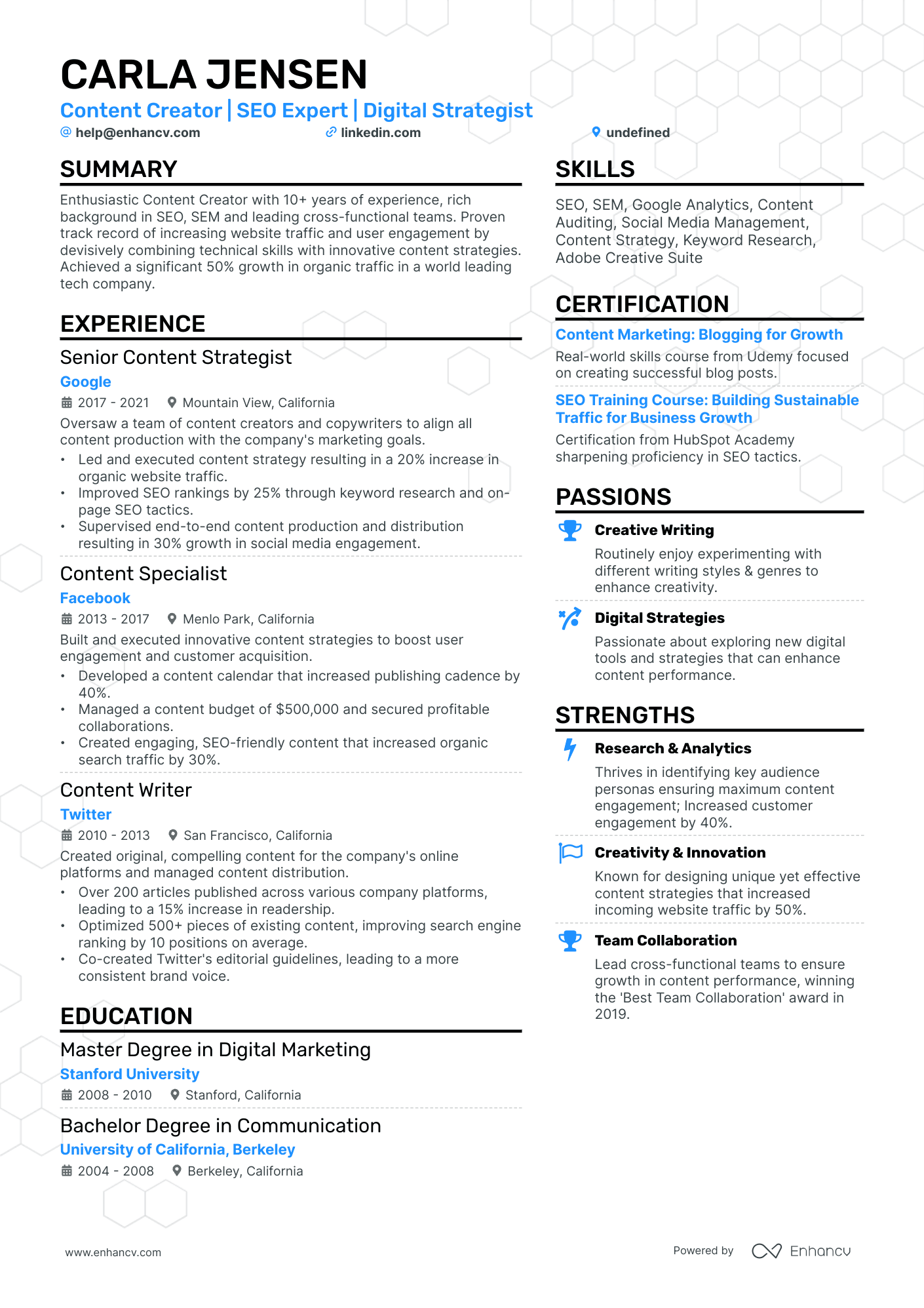
Source: enhancv.com
Types of Content Creators and Bloggers
Content creators are not a homogeneous group. For accurate analysis, classification by format and primary channel is essential:
- Traditional Bloggers: Writers who produce long-form articles on personal blogs or major publishing networks. They typically excel in SEO and email marketing, making them valuable partners for brands seeking informative content with lasting search visibility.
- Social Media Influencers: Creators who build audiences on Instagram, TikTok, X, or Facebook, focusing on visual storytelling and trend engagement.
- Video Creators and Vloggers: YouTubers and streamers who produce video content, from educational tutorials to live entertainment.
- Podcasters: Audio-first creators who build intimate, high-trust audiences through regular conversational content.
- Newsletter Writers: Direct-to-audience writers who distribute curated or original content via email, commonly monetized through subscriptions.
- Hybrid Creators: The most common modern archetype, these creators use blogging as a foundation while repurposing content across video, audio, and social channels.
The Importance of Platform Mapping
Platform choice dramatically influences analysis methodology. A blog and a YouTube channel serve distinct audience behaviors and demand different metrics. Reading a 2,000-word article signals high purchase intent, while watching a 30-second TikTok video may simply indicate entertainment-seeking behavior.
When analyzing a creator, you must map where their audience lives, how content travels between platforms, and where actual conversion occurs. This mapping allows analysts to measure the true return on content effort rather than mistaking vanity metrics for meaningful results.
Consider, for example, a food blogger who posts recipes on their website, shares behind-the-scenes content on Instagram, and publishes cooking tutorials on YouTube. Each platform serves a different function: the blog captures search traffic and drives email sign-ups, Instagram builds brand personality, and YouTube demonstrates expertise. Analyzing any single platform in isolation would provide an incomplete—and potentially misleading—picture of the creator's true influence.
---
Quantitative Metrics for Content Creator Analysis
Quantitative analysis focuses on hard numbers. These measurements enable objective comparisons between creators and tracking over time. Understanding which metrics matter—and which ones deceive—is the foundation of effective analysis for bloggers and content creators alike.
Reach Metrics
Reach indicates how many people have the potential to see a creator's content. Common indicators include page impressions, monthly unique visitors, follower counts, and video views. While reach has long been the default measure of success, it is easily inflated by paid promotion, viral anomalies, and bot traffic.
A creator with one million Instagram followers may generate less genuine influence than a blogger with 50,000 highly engaged email subscribers. Reach matters, but it must always be contextualized against other metrics to reveal its true value.
Engagement Metrics
Engagement metrics reveal how audiences interact with content. Analysts examine click-through rates, comments, shares, saves, likes, and average time spent on a page. Shares carry particular weight because they represent an audience member's willingness to associate their own reputation with the content.
When evaluating engagement, context is everything. A blog post that generates high engagement but low traffic often indicates a deeply loyal readership—a valuable asset for brands seeking authentic partnerships. Conversely, a high-traffic post with zero interaction suggests content that attracts visitors but fails to resonate. The former builds long-term equity; the latter merely generates transient attention.
Conversion Metrics
The most commercially significant metrics measure conversion—the moment when audience attention transforms into action. When analyzing a creator from a business perspective, track email sign-ups, affiliate link clicks, product sales, and paid subscription additions. A strong conversion rate demonstrates that the creator's audience trusts their recommendations and is willing to take meaningful action.
A balanced creator analysis never isolates a single metric. Instead, it builds a ratio-based view. Engagement rate (total interactions divided by total reach) provides a far more accurate indication of audience health than follower count alone. Similarly, conversion rate from content click to completed purchase reveals more than raw sales volume when comparing creators across different niches.
---
Qualitative Analysis of Content Effectiveness
Numbers alone cannot fully explain a creator's performance. Qualitative analysis examines the substance and style of content to determine why metrics behave as they do. This dimension of analysis requires judgment, context, and an understanding of audience expectations.
Content Quality Assessment
Evaluating content quality requires reviewing production value, accuracy, originality, and narrative structure. A successful blog post demonstrates thorough research, credible sourcing, and a clear, engaging writing style. High-quality creators consistently offer audiences a distinct point of view rather than summarizing generic information available anywhere on the internet.
Ask yourself: Does this content teach me something new? Does it challenge assumptions? Does it reflect genuine expertise? Content that answers yes to these questions typically outperforms content that merely fills space. For bloggers and content creators aiming to establish authority, this qualitative dimension often separates sustainable success from short-term attention.
Brand Fit and Authenticity
For brands partnering with creators, alignment of values and aesthetic is critical. An effective analysis judges whether a product feels naturally integrated into a creator's content or awkwardly forced. Audiences possess a strong radar for inauthentic promotion, and mismatches can damage trust that took years to build.
When evaluating long-term sustainability, look for creators who only endorse products they genuinely use and recommend. The most successful creator-brand partnerships feel like recommendations from a trusted friend rather than paid advertisements. Analyzing this authenticity requires reading comments, observing audience reactions, and reviewing the creator's history of partnerships.
---
Audience Analysis and Persona Development
Audience analysis sits at the core of understanding content creator value. A creator's worth derives entirely from their community's characteristics and behaviors—the size of that community matters less than its composition and engagement patterns.
Demographic data provides the foundation for this analysis, revealing who a creator's content actually reaches. Analysts rely on age range, gender distribution, geographic location, language, and device usage. Platforms like YouTube Analytics, Instagram Insights, and Google Analytics provide rich demographic breakdowns for each creator.
More sophisticated analysis incorporates psychographic data—values, lifestyle choices, and the answer to a vital question: What problems does this audience need solved? A personal finance blogger might primarily attract readers aged 25 to 35 focused on debt repayment. A parenting influencer might reach millennial mothers navigating work-life balance. Understanding these motivations transforms raw demographic data into actionable insight.
Developing detailed audience personas brings these statistics to life. Personas help advertisers target campaigns effectively, guide product development, and inform content strategy. Bloggers and content creators who deeply understand their audience can customize everything from writing tone to publishing time, ultimately improving every performance metric.
---
Monetization and Business Model Analysis
Audience understanding directly enables monetization decisions. A creator who knows their audience's pain points can develop products that solve specific problems; a brand that understands a creator's audience can craft partnerships that feel relevant rather than intrusive.
For a robust evaluation of a creator's business model, consider these monetization streams:
- Display Advertising: Earnings generated by ad networks on blog pages or videos. This income scales with traffic volume but often requires substantial reach to generate meaningful revenue.
- Affiliate Marketing: Commission earned by promoting third-party products and services through unique tracking links. This model rewards trust and recommendation quality.
- Sponsored Content: Paid partnerships where brands compensate the creator for featuring a product or service. These require careful brand-fit analysis.
- Digital Products: Revenue from selling e-books, templates, online courses, or printable resources. This represents some of the highest-margin income available to bloggers and content creators.
- Membership and Subscription: Income from platforms such as Patreon, Substack, or premium newsletter tiers. This model provides predictable recurring revenue.
- Services and Consulting: Revenue from offering coaching, freelance writing, or strategy services tied to the creator's expertise.
A mature creator analysis also calculates revenue diversification—a critical indicator of stability. Creators relying heavily on a single income source become vulnerable to algorithm changes, platform policy shifts, and economic downturns. Successful bloggers and content creators treat their content as a media business and continuously analyze which streams offer the strongest returns for their time investment.
---
Competitive Analysis for Creators
Market positioning directly affects revenue sustainability. Every creator operates within a competitive niche, and understanding that landscape is essential for differentiation and growth.
Performing a competitor analysis using a SWOT framework helps structure findings. Analysts evaluate the creator's own Strengths and Weaknesses while examining Opportunities and Threats present in the wider market. A blogger may have excellent writing skills but weak video presence, while a competitor excels at short-form video engagement. Recognizing these gaps reveals opportunities for growth.
Gap analysis can uncover topics and formats that competitors fail to cover, highlighting promising space for expansion. If every competitor in the personal finance niche targets debt repayment, a creator might differentiate by addressing wealth building for freelancers—an underserved audience with distinct financial challenges.
Competitors also serve as valuable benchmarking tools. Compare a creator's engagement rate, content frequency, and monetization approach against other bloggers and content creators with comparable audience sizes. These comparative benchmarks prevent unfair evaluations where a developing creator is judged against a decade-old account with established authority.
---
Tools and Frameworks for Conducting Analysis
Time efficiency is essential in content analysis, and specialized tools can dramatically streamline the process. The right toolkit depends on your analytical goals, the platforms you're examining, and your reporting cadence.
Web Analytics and SEO Tools
Google Analytics remains the gold standard for tracking blog traffic, user behavior, and conversions. Its integration with Google Search Console provides invaluable data on organic search performance, including which queries drive traffic and how your content ranks for target keywords.
For deeper SEO analysis, tools like SEMrush and Ahrefs audit a blog's backlink profile, domain authority, and keyword rankings. These platforms reveal not just how a creator performs but why—showing which content earns links and which topics capture search demand. For bloggers focused on organic growth, these insights are indispensable.
Social Media and Content Analysis
Native analytics dashboards on YouTube, Instagram, and TikTok outline audience growth, impressions, and engagement directly. For cross-platform analysis, tools like BuzzSumo identify which content formats and topics generate the most social sharing, while Brandwatch or Talkwalker measure audience sentiment and unprompted brand mentions.
Email and Audience Tools
For creators with newsletter components, Substack and ConvertKit Analytics track email engagement and paid subscriber conversion. These tools reveal the health of direct audience relationships—often the most valuable asset a creator owns.
Building an Efficient Workflow
An efficient analytical workflow selects three or four primary tools and runs a monthly reporting cadence. This regularity allows bloggers, content creators, and brand partners to observe long-term trajectories rather than reacting to short-term noise. Remember that tools deliver data, but interpretation requires human judgment, contextual knowledge, and a clear understanding of strategic goals.
---
How to Structure Your Analysis Report
Once you have gathered data and developed insights, a clear reporting structure helps all stakeholders act on your findings. A definitive creator analysis should include:
1. Executive Summary: Present the overall conclusion and key recommendations upfront.
2. Channel Performance Overview: Show which platforms are growing, stagnating, or declining.
3. Demographic Summaries: Draw from audience insights to profile who the creator reaches.
4. Content Breakdown: Reveal which topics, formats, and publication times perform best.
5. Engagement and Sentiment Analysis: Examine how audiences interact and feel about the content.
6. Monetization and Revenue Breakdown: Detail income streams and their relative performance.
7. Competitive Benchmark Comparison: Position the creator against relevant peers.
8. Strategic Recommendations: Offer clear, actionable guidance for improvement and growth.
This structure moves from summary to detail, from description to prescription. It allows busy executives to grasp key findings quickly while providing depth for those who need it. For bloggers and content creators reviewing their own performance, this framework ensures no critical dimension is overlooked.
---
Conclusion
Analyzing bloggers and content creators has become a sophisticated discipline combining quantitative rigor with qualitative understanding. The modern creator economy rewards more than viral moments and enormous follower counts—it values strategic thinking, audience trust, and meaningful engagement. For anyone seeking informed insights into this space, the analytical framework presented here offers a reliable starting point.
The most critical lesson from this analysis is that no single metric tells the complete story. Reach without engagement signals passive audiences. Engagement without conversion suggests content that entertains but doesn't persuade. Conversion without audience understanding risks short-term gains at the expense of long-term trust. Only by examining these dimensions together can you understand a creator's true value.
This analytical landscape continues to evolve. Artificial intelligence is reshaping content creation and discovery. Platform diversification is fragmenting audiences across new channels. Regulatory changes are affecting how creators monetize and how brands measure partnership success. The bloggers, content creators, and brands that thrive will be those who treat analysis as an ongoing practice rather than a one-time audit.
For brands, rigorous creator analysis uncovers authentic and valuable partnership opportunities. For bloggers and content creators, it offers a practical roadmap for identifying strengths, addressing weaknesses, and scaling their impact. The most successful practitioners will be those who invest in understanding not just what performed well last month, but what their audiences will need next year.
The tools and frameworks presented here provide a starting point—but they are only as valuable as the strategic thinking that guides their application. Combine data with judgment, metrics with context, and analysis with action. That is the formula that transforms raw numbers into sustainable success in the creator economy.
---
If you found this analysis useful, subscribe now to receive our weekly newsletter featuring data-driven insights for bloggers, content creators, and digital marketers. Each edition breaks down emerging trends, platform updates, and monetization strategies—delivered straight to your inbox every Tuesday morning.
Comments
Post a Comment