
How AI and Automation are Reshaping the Job Market
The rapid advancement of artificial intelligence (AI) and automation technologies is profoundly reshaping the job market. This transformation brings both challenges and opportunities, impacting job displacement, job creation, skills requirements, and the overall structure of the workforce. Understanding these shifts is crucial for individuals, businesses, and policymakers alike to navigate the evolving landscape of the future of work.
This article explores the multifaceted ways AI and automation are impacting the job market. It delves into the potential for job displacement, the emergence of new job roles, the growing skills gap, and the importance of reskilling and upskilling initiatives. Furthermore, it examines the economic impact, ethical considerations, and the potential for human-machine collaboration that will define the future of work.
 Source: tipalti.com
1. The Rise of AI and Automation
Artificial intelligence and automation are no longer futuristic concepts but present-day realities impacting numerous industries. AI refers to the development of computer systems that can perform tasks that typically require human intelligence, such as learning, problem-solving, and decision-making. Automation, on the other hand, involves the use of technology to perform tasks with minimal human intervention.
- Key Drivers: Several factors are driving the adoption of AI and automation, including:
- Technological Advancements: Improvements in computing power, algorithms, and data availability.
- Economic Pressures: The need for increased efficiency, productivity, and cost reduction.
- Global Competition: The imperative to remain competitive in an increasingly globalized market.
- Changing Demographics: Addressing labor shortages and supporting an aging workforce.
- Applications Across Industries: AI and automation are being implemented across a wide range of sectors, including:
- Manufacturing: Automating production lines, quality control, and supply chain management.
- Healthcare: Diagnosing diseases, personalizing treatment plans, and automating administrative tasks.
- Finance: Detecting fraud, providing personalized financial advice, and automating customer service.
- Retail: Optimizing inventory management, personalizing shopping experiences, and automating checkout processes.
- Transportation: Developing self-driving vehicles, optimizing logistics, and improving traffic flow.
- Impact on Productivity: The implementation of AI and automation can lead to significant gains in productivity, efficiency, and accuracy. For example, automated systems can operate 24/7 without fatigue, reducing errors and increasing output. AI algorithms can analyze vast amounts of data to identify patterns and insights that would be impossible for humans to detect.
 Source: techjury.net
2. Job Displacement: The Automation Threat
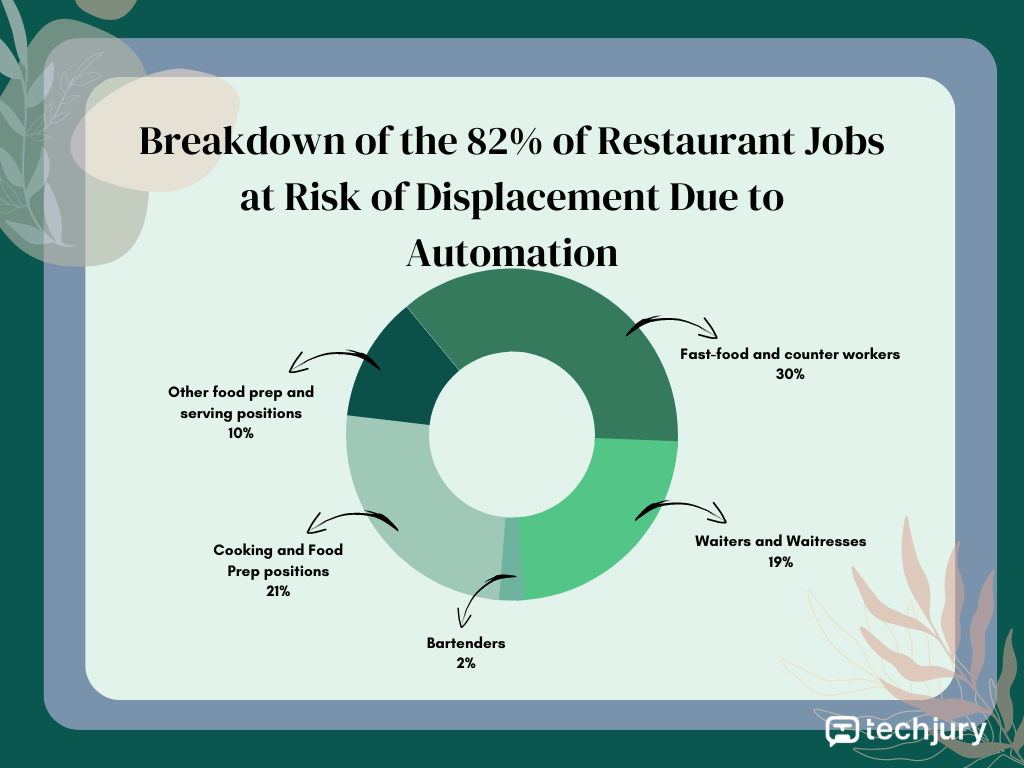
One of the primary concerns surrounding AI and automation is the potential for job displacement. As machines become capable of performing tasks previously done by humans, there is a risk that many jobs could become obsolete.
- Vulnerable Job Categories: Certain job categories are more vulnerable to automation than others. These include:
- Repetitive Tasks: Jobs involving highly repetitive and routine tasks, such as data entry, assembly line work, and customer service.
- Manual Labor: Jobs involving physical labor in predictable environments, such as warehouse work and transportation.
- Data Processing: Jobs involving processing large amounts of data, such as accounting, bookkeeping, and claims processing.
- Examples of Job Displacement: Several examples illustrate the potential for job displacement:
- Manufacturing: Robots replacing human workers on assembly lines.
- Transportation: Self-driving trucks and delivery drones replacing truck drivers and delivery personnel.
- Customer Service: Chatbots and AI-powered virtual assistants replacing human customer service representatives.
- Administrative Tasks: Automation software replacing administrative assistants and data entry clerks.
- Economic and Social Implications: Job displacement can have significant economic and social implications, including:
- Increased Unemployment: Rising unemployment rates, particularly among workers in vulnerable job categories.
- Income Inequality: Widening income inequality as high-skilled workers benefit from AI and automation while low-skilled workers are displaced.
- Social Unrest: Potential for social unrest and political instability as workers feel threatened by technological advancements.
 Source: cersnow.com
3. Job Creation: The Emergence of New Roles
While AI and automation may lead to job displacement in some areas, they also have the potential to create new job opportunities. As technology evolves, new roles emerge to support the development, implementation, and maintenance of AI and automation systems.
- New Job Categories: Some of the new job categories that are emerging include:
- AI Specialists: AI researchers, data scientists, machine learning engineers, and AI ethicists.
- Automation Engineers: Robotics engineers, automation specialists, and process automation consultants.
- Data Analysts: Data analysts, business intelligence analysts, and data visualization specialists.
- Cybersecurity Professionals: Cybersecurity analysts, security engineers, and data privacy specialists.
- Examples of Job Creation: Several examples illustrate the potential for job creation:
- AI Development: Companies hiring AI specialists to develop and implement AI solutions.
- Automation Implementation: Businesses hiring automation engineers to design and deploy automated systems.
- Data Analysis: Organizations hiring data analysts to interpret and leverage the data generated by AI and automation systems.
- Cybersecurity: Increased demand for cybersecurity professionals to protect AI and automation systems from cyber threats.
- The Human Element: Even with increased automation, human skills will remain essential. New jobs will require a combination of technical skills and uniquely human skills such as:
- Creativity: Developing innovative solutions and strategies.
- Critical Thinking: Analyzing complex problems and making informed decisions.
- Emotional Intelligence: Understanding and managing emotions, building relationships, and collaborating effectively.
- Complex Problem-Solving: Tackling novel, ill-defined problems in complex environments.

4. The Skills Gap: Bridging the Divide
The rapid adoption of AI and automation is creating a significant skills gap in the job market. Many workers lack the necessary skills to perform the new jobs that are emerging, while employers struggle to find qualified candidates to fill these positions.
- Defining the Skills Gap: The skills gap refers to the mismatch between the skills that employers need and the skills that workers possess. This gap is widening as technology advances at an accelerating pace.
- Key Skills in Demand: Some of the key skills that are in high demand include:
- Digital Skills: Proficiency in using digital technologies, including software, hardware, and online platforms.
- Data Analysis Skills: Ability to collect, analyze, and interpret data to inform decision-making.
- Programming Skills: Knowledge of programming languages such as Python, Java, and C++.
- AI and Machine Learning Skills: Expertise in developing and implementing AI and machine learning algorithms.
- Critical Thinking and Problem-Solving Skills: Ability to analyze complex problems and develop effective solutions.
- Challenges in Addressing the Skills Gap: Several challenges hinder efforts to address the skills gap:
- Rapid Technological Change: The pace of technological change makes it difficult for education and training programs to keep up.
- Lack of Awareness: Many workers are unaware of the skills they need to remain competitive in the job market.
- Limited Access to Training: Access to high-quality training and education programs is often limited, particularly for low-skilled workers.
- Funding Constraints: Insufficient funding for education and training initiatives.
 Source: www.vultus.com
5. Reskilling and Upskilling: Preparing the Workforce
Reskilling and upskilling initiatives are essential for preparing the workforce for the future of work. Reskilling involves learning new skills to transition to a different job or industry, while upskilling involves enhancing existing skills to improve performance in a current role.
- Importance of Lifelong Learning: The need for lifelong learning is becoming increasingly important as technology continues to evolve. Workers must be willing to continuously update their skills and knowledge throughout their careers.
- Strategies for Reskilling and Upskilling: Several strategies can be employed to reskill and upskill the workforce:
- Online Courses and Training Programs: Online platforms offer a wide range of courses and training programs that can help workers acquire new skills.
- Employer-Sponsored Training: Employers can provide training and development opportunities for their employees to enhance their skills.
- Government Initiatives: Governments can implement policies and programs to support reskilling and upskilling efforts.
- Partnerships between Education and Industry: Collaboration between educational institutions and industry can help ensure that training programs are aligned with the needs of employers.
- Examples of Successful Programs: Numerous successful reskilling and upskilling programs have been implemented around the world:
- Amazon's Upskilling 2025: A program providing Amazon employees with access to training in high-demand fields.
- Google Career Certificates: Online programs offering training in areas such as data analytics, project management, and UX design.
- Microsoft's Skills Initiative: A global initiative aimed at providing digital skills training to millions of people.
- The Role of Education Institutions: Educational institutions play a critical role in preparing students for the future of work by:
- Integrating Digital Skills into Curricula: Incorporating digital skills into all areas of study.
- Offering Training in Emerging Technologies: Providing training in AI, automation, and other emerging technologies.
- Promoting Lifelong Learning: Encouraging students to develop a mindset of lifelong learning.
 Source: www.listennotes.com
6. Career Development in the Age of AI
AI and automation are transforming career development, requiring individuals to adopt new strategies for planning and managing their careers.
- Adapting to Change: Workers need to be adaptable and resilient in the face of technological change. This includes being open to learning new skills and embracing new roles.
- Focusing on Transferable Skills: Developing transferable skills, such as critical thinking, problem-solving, communication, and collaboration, can help workers adapt to changing job requirements.
- Building a Personal Brand: Creating a strong personal brand can help workers stand out in a competitive job market. This includes showcasing their skills, experience, and accomplishments through online platforms such as LinkedIn.
- Networking and Mentorship: Building a strong network of professional contacts and seeking mentorship can provide valuable support and guidance for career development.
- Embracing Continuous Learning: Committing to continuous learning and professional development is essential for staying relevant in the job market.
7. Economic Impact: Productivity and Growth
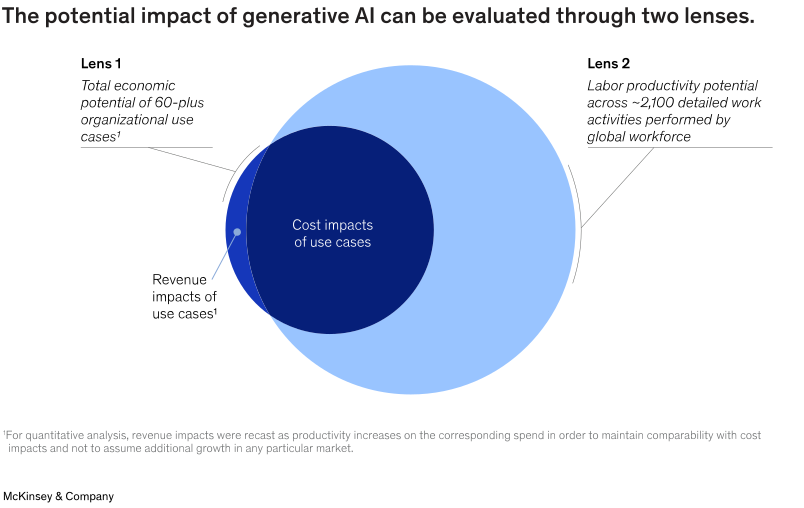
The economic impact of AI and automation is complex and multifaceted. While there are concerns about job displacement, there is also the potential for significant economic growth and increased productivity.
- Potential Benefits: Some of the potential economic benefits of AI and automation include:
- Increased Productivity: AI and automation can automate tasks and processes, leading to significant gains in productivity.
- Economic Growth: Increased productivity can drive economic growth and create new opportunities.
- Innovation: AI can accelerate innovation by enabling researchers to analyze vast amounts of data and identify new patterns and insights.
- Improved Quality of Life: AI can improve the quality of life by automating mundane tasks and providing personalized services.
- Potential Risks: Some of the potential economic risks of AI and automation include:
- Job Displacement: Job displacement can lead to increased unemployment and income inequality.
- Wage Stagnation: Wage stagnation can occur if the benefits of increased productivity are not shared with workers.
- Increased Inequality: Increased inequality can lead to social unrest and political instability.
- Concentration of Power: The concentration of power in the hands of a few companies that control AI technology.
- Mitigating Negative Impacts: Several strategies can be employed to mitigate the negative economic impacts of AI and automation:
- Investing in Education and Training: Investing in education and training to prepare workers for the jobs of the future.
- Strengthening Social Safety Nets: Strengthening social safety nets to provide support for workers who are displaced by automation.
- Promoting Inclusive Growth: Implementing policies that promote inclusive growth and ensure that the benefits of AI and automation are shared by all.
- Regulating AI and Automation: Regulating AI and automation to ensure that they are used in a responsible and ethical manner.
 Source: www.geeksforgeeks.org
8. AI Ethics: Ensuring Responsible Development and Use
As AI becomes more prevalent, it is essential to address the ethical considerations surrounding its development and use. AI ethics is a field that seeks to ensure that AI systems are developed and used in a manner that is fair, transparent, and accountable.
- Key Ethical Concerns: Some of the key ethical concerns surrounding AI include:
- Bias and Discrimination: AI systems can perpetuate and amplify existing biases in data, leading to discriminatory outcomes.
- Privacy: AI systems can collect and analyze vast amounts of personal data, raising concerns about privacy and surveillance.
- Transparency and Explainability: AI systems can be opaque and difficult to understand, making it challenging to hold them accountable for their decisions.
- Job Displacement: The potential for AI to displace workers raises ethical concerns about the responsibility of developers and policymakers to mitigate the negative impacts.
- Principles of AI Ethics: Several organizations and initiatives have developed principles of AI ethics to guide the development and use of AI systems. These principles typically include:
- Fairness: Ensuring that AI systems do not discriminate against individuals or groups.
- Transparency: Making AI systems understandable and explainable.
- Accountability: Holding individuals and organizations accountable for the decisions made by AI systems.
- Privacy: Protecting the privacy of individuals and ensuring that personal data is used responsibly.
- Beneficence: Ensuring that AI systems are used to benefit humanity.
- Non-Maleficence: Avoiding the use of AI systems to cause harm.
- Addressing Ethical Challenges: Several strategies can be employed to address the ethical challenges surrounding AI:
- Developing Ethical Guidelines: Developing ethical guidelines for the development and use of AI systems.
- Promoting Diversity and Inclusion: Promoting diversity and inclusion in the AI workforce to ensure that a wide range of perspectives are considered.
- Auditing AI Systems: Auditing AI systems to identify and mitigate bias and discrimination.
- Regulating AI Systems: Regulating AI systems to ensure that they are used in a responsible and ethical manner.
 Source: worth.com
9. Human-Machine Collaboration: The Future of Work
The future of work is likely to involve increased collaboration between humans and machines. Instead of replacing humans entirely, AI and automation can augment human capabilities, enabling workers to focus on higher-value tasks.
- Benefits of Collaboration: Some of the benefits of human-machine collaboration include:
- Increased Efficiency: Machines can automate repetitive tasks, freeing up humans to focus on more complex and creative tasks.
- Improved Decision-Making: AI can provide insights and recommendations to support human decision-making.
- Enhanced Creativity: Humans and machines can collaborate to generate new ideas and solutions.
- Greater Flexibility: Human-machine collaboration can enable greater flexibility and adaptability in the workplace.
- Examples of Collaboration: Several examples illustrate the potential for human-machine collaboration:
- Healthcare: AI assisting doctors in diagnosing diseases and personalizing treatment plans.
- Manufacturing: Robots collaborating with human workers on assembly lines.
- Customer Service: Chatbots handling routine inquiries, while human agents handle more complex issues.
- Education: AI providing personalized learning experiences for students.
- Designing Collaborative Workflows: Designing effective collaborative workflows is essential for maximizing the benefits of human-machine collaboration. This includes:
- Identifying Tasks that Can Be Automated: Identifying tasks that are best suited for automation.
- Defining Roles and Responsibilities: Clearly defining the roles and responsibilities of humans and machines.
- Providing Training and Support: Providing training and support to help workers collaborate effectively with machines.
- Monitoring and Evaluating Performance: Monitoring and evaluating the performance of human-machine teams to identify areas for improvement.
.

10. Navigating the Workforce Transformation
The workforce transformation driven by AI and automation requires a proactive approach from individuals, businesses, and policymakers.
- Recommendations for Individuals:
- Embrace Lifelong Learning: Commit to continuous learning and professional development.
- Develop Transferable Skills: Focus on developing transferable skills such as critical thinking, problem-solving, and communication.
- Build a Personal Brand: Create a strong personal brand to showcase your skills and experience.
- Network and Seek Mentorship: Build a strong network of professional contacts and seek mentorship.
- Adapt to Change: Be adaptable and resilient in the face of technological change.
- Recommendations for Businesses:
- Invest in Training and Development: Provide training and development opportunities for employees to enhance their skills.
- Redesign Jobs and Workflows: Redesign jobs and workflows to incorporate AI and automation in a way that enhances human capabilities.
- Promote a Culture of Innovation: Foster a culture of innovation and experimentation.
- Address Ethical Concerns: Address ethical concerns surrounding AI and automation.
- Collaborate with Education Institutions: Partner with education institutions to ensure that training programs are aligned with the needs of employers.
- Recommendations for Policymakers:
- Invest in Education and Training: Invest in education and training to prepare the workforce for the jobs of the future.
- Strengthen Social Safety Nets: Strengthen social safety nets to provide support for workers who are displaced by automation.
- Promote Inclusive Growth: Implement policies that promote inclusive growth and ensure that the benefits of AI and automation are shared by all.
- Regulate AI and Automation: Regulate AI and automation to ensure that they are used in a responsible and ethical manner.
- Support Research and Development: Support research and development in AI and automation to drive innovation and economic growth.
Conclusion
AI and automation are profoundly reshaping the job market, presenting both challenges and opportunities. While job displacement is a valid concern, the emergence of new roles and the potential for increased productivity and economic growth offer a positive outlook. Addressing the skills gap through reskilling and upskilling initiatives, promoting AI ethics, and fostering human-machine collaboration are crucial steps in navigating this transformation. By embracing lifelong learning, adapting to change, and working together, individuals, businesses, and policymakers can ensure that the future of work is one of shared prosperity and opportunity.
Explore online resources for upskilling and reskilling, such as Coursera, edX, and LinkedIn Learning, to prepare for the changing job market. Learn more about AI ethics and responsible AI development from organizations like the AI Now Institute and the Partnership on AI.
Comments
Post a Comment