Source: www.broadbandsearch.net
Every minute, over 500 hours of video are uploaded to YouTube, and millions of blog posts are published across the web. Yet only 12% of the 50 million people vying for attention in this digital gold rush earn a full-time income. What separates the 12% from the 88%? For bloggers and content creators seeking sustainable careers, this question is not merely academic—it is existential.
This comprehensive guide argues that the divide between hobbyist creators and professional digital publishers comes down to three factors: data-driven decision-making, diversified revenue streams, and strategic audience ownership—not raw talent or content volume. Whether you are an aspiring writer, a brand looking to collaborate, or a seasoned creator seeking to refine your approach, this in-depth analysis will equip you with actionable insights backed by industry research. By understanding the evolving content creation landscape, you can position yourself among the successful minority who turn creative output into reliable income.
---

Source: webnus.net
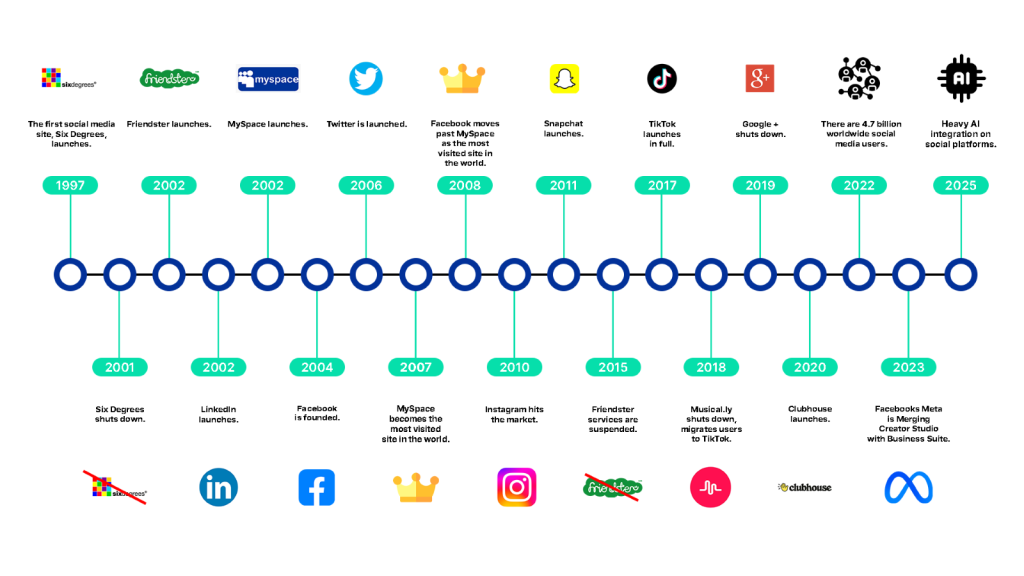
Blogging began in the late 1990s as a personal journaling phenomenon. Platforms like LiveJournal and Blogger allowed ordinary people to publish their thoughts to a global audience for the first time. By the mid-2000s, blogs had evolved into niche authority sites covering everything from tech reviews to parenting advice. The introduction of WordPress in 2003 and the rise of Google AdSense democratized publishing and advertising, enabling anyone with an internet connection to generate income.
The rise of video platforms in the mid-2000s gave birth to a new type of digital professional: the content creator. Today, content creation encompasses a vast array of formats, including short-form video, podcasts, newsletters, and interactive digital products. This evolution from text-only publishing to multi-format creation has fundamentally changed how audiences consume information and how creators build careers. For modern bloggers and content creators, understanding this history helps contextualize current best practices and emerging opportunities.
Source: market.us
| Metric | Value |
|--------|-------|
| Number of blogs indexed on WordPress | Over 60 million |
| Active content creators globally | 50 million+ |
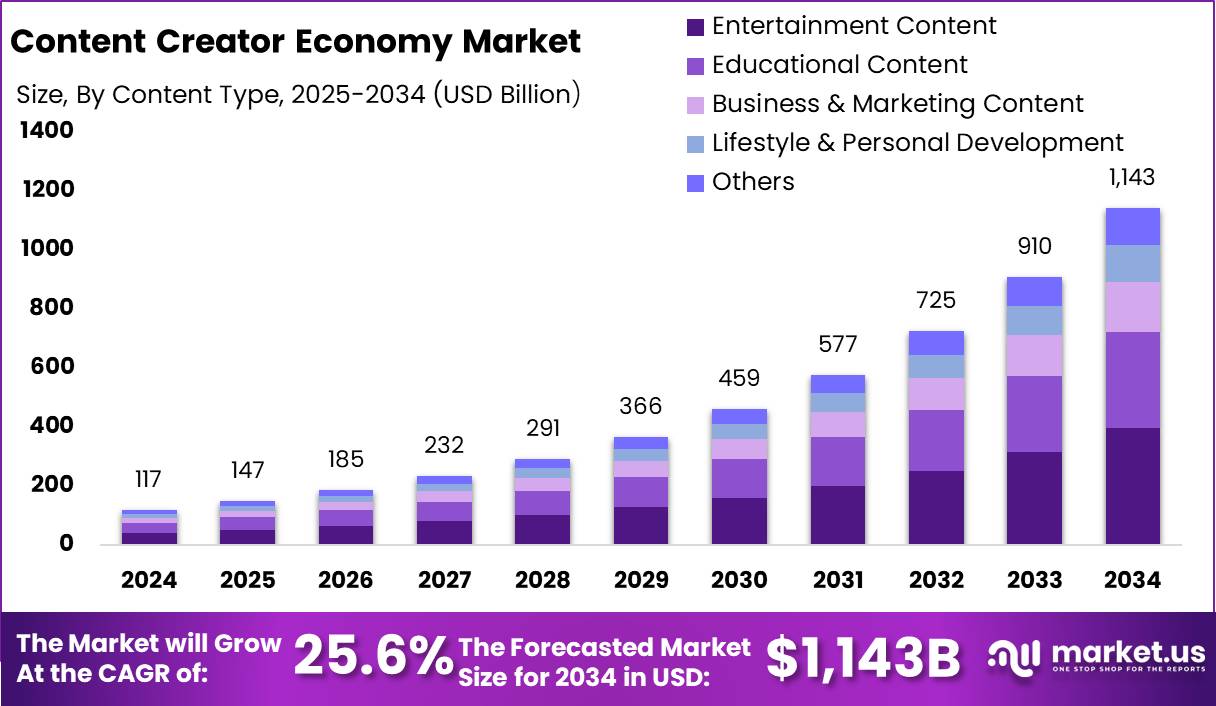
| Creator economy market size | $104.2 billion (2022) |
| Percentage of creators earning full-time income | Only 12% |
| Average monthly earnings for successful bloggers | $1,500–$5,000 |
These figures reveal a critical truth: the content creation space is crowded, but the rewards for those who analyze their approach strategically are substantial. The 12% who earn full-time income share common patterns—they treat content creation as a business, not a hobby, and they make decisions based on evidence rather than intuition. For informative content that ranks well in search engines, this analytical foundation is essential.
---
While the terms are often used interchangeably, distinct characteristics separate traditional bloggers from modern content creators. Understanding these differences is essential for choosing your publishing strategy and positioning yourself effectively in the crowded market described above.
Bloggers primarily produce written articles, long-form guides, and text-based resources. Their content tends to be evergreen, providing continued search engine value over months or years. This format favors depth, research, and search engine optimization—readers arrive with specific questions and leave with comprehensive answers. For bloggers and content creators focused on organic traffic, this approach builds compounding assets.
Content creators frequently distribute across multiple media types, including video, audio, and visual graphics. Their output is often faster-moving, trend-driven, and designed for algorithmic platforms. This approach prioritizes reach and engagement velocity over long-term search visibility.
The strategic implication of this difference is significant. Bloggers build compounding assets that generate passive traffic over time, while content creators build momentum that requires constant feeding. The most successful digital professionals increasingly combine both approaches, using written content for search permanence and video/social content for discovery and personality-driven connection.
Bloggers typically build subscriber-based relationships through email newsletters and RSS feeds. Their audiences are often seeking answers to specific questions or solutions to defined problems. This relationship is transactional at first—the reader finds the answer they need—but can deepen into trust-based loyalty over time.
Content creators, by contrast, cultivate platform-based followings where personality and engagement are central. Audiences follow the individual, not just the information they provide. This creates a more emotionally connected audience but also a more volatile one, as platform algorithm changes can sever the connection overnight. Savvy bloggers and content creators recognize the importance of converting platform followers into email subscribers to maintain control.
Traditional bloggers rely heavily on display advertising, affiliate marketing, and sponsored posts embedded within long-form articles. These models reward traffic volume and search visibility. Content creators often diversify into product sales, memberships, digital goods, and direct fan funding through platforms like Patreon or Ko-fi, which reward audience loyalty and engagement depth.
---
One of the most significant evolutions in the digital content space is the shift toward analytics-based decision making. Successful bloggers and creators do not guess what their audience wants; they measure it. Tools like Google Analytics, SEMrush, and platform-native insights provide granular data on audience demographics, behavior, and content performance.
Successful creators track these five metrics consistently:
1. Engagement rate – likes, comments, shares, and saves relative to reach
2. Retention rate – how long viewers or readers stay engaged with content
3. Click-through rate (CTR) – the percentage of audience members who take a desired action
4. Conversion rate – the percentage of traffic that results in sales, signups, or downloads
5. Return on content investment (ROCI) – revenue generated relative to production costs
Deep audience analysis allows creators to develop detailed personas. A persona includes demographic details, pain points, content consumption preferences, and purchasing behaviors. When creators align their content strategy with these personas, they experience measurably higher engagement and loyalty.
For example, a personal finance blogger targeting millennials might analyze search data to discover that their audience prefers actionable checklists over theoretical explanations. Armed with this insight, the blogger restructures posts to include printable budget templates and step-by-step investment guides, resulting in a 35% increase in time-on-page. This kind of iterative refinement—measuring, adjusting, and measuring again—is what separates professionals from amateurs. For bloggers and content creators aiming to produce informative content that resonates, this evidence-based approach is non-negotiable.
---
Monetization strategies only succeed when paired with genuine audience engagement, which we explore below. But first, let us examine the primary revenue streams available to digital publishers. Understanding these options helps bloggers and content creators build resilient income structures.
Programmatic advertising through networks like Google AdSense, Mediavine, and AdThrive remains a staple for bloggers with substantial traffic. Publishers generally need 25,000 to 50,000 monthly page views to qualify for premium networks. Revenue per 1,000 impressions (RPM) varies dramatically by niche, from $10 for general lifestyle content to $50 or more for finance and insurance-focused sites.
The key limitation of display advertising is its dependence on traffic volume. Creators who rely solely on ads must constantly chase new readers to maintain income, making them vulnerable to algorithm changes and search ranking fluctuations.
Affiliate marketing is arguably the most accessible monetization strategy for bloggers. Creators earn commissions by recommending products or services through unique tracking links. Top performers in niches like software, home goods, and fashion earn between $1,000 and $10,000 monthly from affiliate revenue alone.
The most effective affiliate strategies include:
- In-depth product comparisons and roundups that help readers make informed decisions
- Honest, experience-based reviews that build trust through transparency
- Integration of affiliate links into genuinely useful tutorial content where recommendations feel organic
- Clear disclosure of affiliate relationships to maintain audience trust and comply with regulations
The most successful content creators do not stop at content itself; they create proprietary digital assets. E-books, online courses, printable resources, and membership communities generate recurring revenue independent of platform algorithms. For instance, a cooking blogger may sell a specialized meal-planning subscription for $9.99 per month, converting a portion of their 100,000 monthly readers into paying subscribers.
Digital products offer the highest profit margins in the creator economy because production costs are minimal after the initial creation. They also provide a hedge against advertising rate declines and platform policy changes.
Brand collaborations represent a significant income stream for creators with engaged audiences. Sponsored posts, product placements, and brand ambassadorships require a delicate balance between monetization and authenticity.
Research indicates that audiences respond favorably to sponsorships when:
- The brand aligns logically with the creator's niche and values
- The creator provides honest opinions, including constructive critiques
- Sponsored content is clearly disclosed, maintaining editorial transparency
- The creator maintains their normal publishing frequency during campaigns, avoiding audience fatigue
---
Acquiring new readers can cost five times more than retaining existing ones, according to marketing research. This principle applies directly to content creation. Bloggers and creators who prioritize community building achieve more stable revenue and enjoy protection against algorithmic changes because their audience follows them across platforms rather than relying on a single distribution channel.
Community-building tactics that deliver tangible results:
- Email newsletters with exclusive content and personal storytelling that deepen the creator-audience relationship
- Private communities on platforms like Facebook Groups or Discord where superfans can interact directly with creators and each other
- Live Q&A sessions and interactive webinars that create real-time engagement opportunities
- User-generated content campaigns that feature audience contributions and make followers feel valued
- Consistent responses to comments and direct messages, demonstrating that the creator genuinely listens
Smart creators analyze when their audience is most active and what content formats generate the most interaction. For example, a tech YouTuber may analyze their analytics and discover that their troubleshooting videos receive twice the comments of their unboxing videos. This data-driven revelation shifts their content calendar to prioritize highly-requested problem-solving content, leading to a measurable spike in subscriber growth.
The key insight is that engagement patterns reveal audience needs that may not be immediately obvious. Creators who actively mine their comment sections, email replies, and community forums for recurring questions and themes can identify content gaps that competitors have overlooked. For bloggers and content creators producing informative content, this feedback loop is invaluable for continuous improvement.
---
Creators who rely on a single platform face existential risk when that platform changes its algorithm. The unpredictable nature of social media feeds has prompted many creators to adopt a "hub and spoke" model, where owned channels (blogs, email lists) serve as the central hub, and social platforms act as distribution spokes. This strategy ensures that even if a social platform collapses or changes its rules, the creator retains direct access to their most valuable asset: their audience.
The barrier to entry has never been lower, and the competition has never been fiercer. With massive volumes of content published every minute, standing out requires either extreme niche specialization or genuinely differentiated production value. Generic content that merely repeats existing information will not survive.
Actionable differentiation strategies include:
- Publishing comprehensive "ultimate guides" that go deeper than competitors and become the definitive resource in your niche
- Incorporating original research, surveys, and unique data sets that cannot be found elsewhere
- Developing a distinctive visual style or editorial voice that makes your content instantly recognizable
- Prioritizing search intent and user experience over keyword stuffing, creating content that genuinely serves the reader
There is often tension between generating revenue and maintaining editorial integrity. Audiences are sophisticated and can detect insincere promotions quickly. Creators who maintain strict sponsorship standards and transparent disclosure policies preserve long-term trust, which ultimately becomes their most valuable asset. Every sponsored post that feels inauthentic erodes audience confidence, making future monetization more difficult.
---
While follower counts and page views provide surface-level validation, sophisticated creators analyze deeper metrics that predict sustainable success.
Indicators that predict long-term success include:
- Return visitor rate – the percentage of repeat traffic demonstrating audience loyalty and content stickiness
- Email list growth rate – a direct measure of audience ownership and independence from platform algorithms
- Comment quality – the depth and relevance of audience discourse, indicating genuine engagement rather than passive consumption
- Revenue per active audience member – the monetization efficiency of your following, revealing whether you are converting attention into income
- Content share rate – an indicator of perceived value and reach amplification, showing that your audience considers your content worth recommending
Every content niche has unique performance baselines. A beauty vlogger's engagement benchmarks differ substantially from those of a B2B SaaS blogger. Creators should benchmark against comparably sized accounts within their specific niche rather than pursuing generic industry averages. This requires researching competitors, analyzing their engagement rates, and identifying realistic performance targets based on your niche, audience size, and content type.
---
As the creator economy matures, several trends will shape the next phase of its evolution. Understanding these trends now will position bloggers and content creators to adapt before the market shifts.
Artificial intelligence tools are transforming content production workflows. Successful creators use AI for research, outlining, and editing, while reserving original thought, personal experience, and creative direction for human input. The creators who thrive will be those who use AI to enhance productivity without sacrificing authenticity—audiences can detect generic, AI-generated content that lacks a human perspective.
Video content continues to dominate user attention. Platforms like TikTok and Instagram Reels have conditioned audiences for rapid, engaging content. Even traditionally written blogs now incorporate video summaries, embedded clips, and interactive elements to capture multi-format audiences. Creators who ignore video risk becoming invisible to younger demographics.
Mass-market content is giving way to hyper-specific micro-communities. Whether it is a newsletter dedicated to urban gardening or a podcast about vintage synthesizers, focused niches build passionate audiences with high lifetime value. Sponsors increasingly prefer micro-influencers with engaged followers over macro-influencers with passive audiences, because niche audiences convert at higher rates.
Platforms like Substack and Medium's partner program have normalized direct payments for digital content. Readers increasingly support creators they trust through paid subscriptions, reducing reliance on advertising revenue and creating predictable monthly income streams. This model rewards quality over quantity and deepens the creator-audience relationship.
---
The digital content landscape has matured from its early blogging roots into a sophisticated, data-driven ecosystem. As we have seen, successful bloggers and content creators share several core characteristics: they understand their audience deeply, they measure their performance rigorously, they diversify their revenue streams, and they prioritize long-term community trust over short-term algorithmic wins. These factors are not optional additions to a content strategy—they are the foundation upon which sustainable careers are built.
The creator economy shows no signs of contraction. With continued growth in digital advertising, e-commerce, and subscription platforms, the opportunities for skilled content professionals remain abundant. However, the difference between a hobbyist and a professional content strategist lies in the rigorous application of analytical thinking. As AI tools become more sophisticated and competition intensifies, the analytical mindset will become even more critical for distinguishing yourself in an increasingly crowded field.
If you are currently creating content, take time this week to audit your own metrics with a specific framework. Download your platform analytics, identify your top three performing pieces from the last 90 days, and ask: What do they have in common? What audience problem do they solve? Which content formats produce the most engagement? Where does your audience spend the most time? What percentage of your traffic converts into email subscribers or customers? Replicate the patterns you discover in your next 10 pieces of content.
The most successful creators do not simply produce content; they analyze it, refine it, and let evidence guide their creativity. That analytical mindset is the true differentiator in the modern content economy—and it will become even more essential as the landscape continues to evolve. Start your analysis today, and your audience will reward you with growth, loyalty, and sustainable income.
---
If you found this analysis valuable, consider subscribing to our newsletter for weekly insights on content strategy, audience growth, and monetization. Subscribe Now to join a community of forward-thinking creators dedicated to building sustainable digital careers.
--------------------------------------------------------------------------- Visit this link to stop these emails: https://zapier.com/manage/zaps/378067272/stop/?check=IjM3ODA2NzI3MiI:1x1NZ1:qWdy8C52alOp4PA9CefvE2B_LlwKUZ3ESUxWXN3h4-s
This comprehensive guide argues that the divide between hobbyist creators and professional digital publishers comes down to three factors: data-driven decision-making, diversified revenue streams, and strategic audience ownership—not raw talent or content volume. Whether you are an aspiring writer, a brand looking to collaborate, or a seasoned creator seeking to refine your approach, this in-depth analysis will equip you with actionable insights backed by industry research. By understanding the evolving content creation landscape, you can position yourself among the successful minority who turn creative output into reliable income.
---
The Evolution of Blogging and Content Creation
Source: webnus.net
From Online Diaries to Digital Empires
Blogging began in the late 1990s as a personal journaling phenomenon. Platforms like LiveJournal and Blogger allowed ordinary people to publish their thoughts to a global audience for the first time. By the mid-2000s, blogs had evolved into niche authority sites covering everything from tech reviews to parenting advice. The introduction of WordPress in 2003 and the rise of Google AdSense democratized publishing and advertising, enabling anyone with an internet connection to generate income.
The rise of video platforms in the mid-2000s gave birth to a new type of digital professional: the content creator. Today, content creation encompasses a vast array of formats, including short-form video, podcasts, newsletters, and interactive digital products. This evolution from text-only publishing to multi-format creation has fundamentally changed how audiences consume information and how creators build careers. For modern bloggers and content creators, understanding this history helps contextualize current best practices and emerging opportunities.
Source: market.us
Key Market Statistics
| Metric | Value |
|--------|-------|
| Number of blogs indexed on WordPress | Over 60 million |
| Active content creators globally | 50 million+ |
| Creator economy market size | $104.2 billion (2022) |
| Percentage of creators earning full-time income | Only 12% |
| Average monthly earnings for successful bloggers | $1,500–$5,000 |
These figures reveal a critical truth: the content creation space is crowded, but the rewards for those who analyze their approach strategically are substantial. The 12% who earn full-time income share common patterns—they treat content creation as a business, not a hobby, and they make decisions based on evidence rather than intuition. For informative content that ranks well in search engines, this analytical foundation is essential.
---
Core Differences Between Bloggers and Content Creators
While the terms are often used interchangeably, distinct characteristics separate traditional bloggers from modern content creators. Understanding these differences is essential for choosing your publishing strategy and positioning yourself effectively in the crowded market described above.
Published Output and Medium
Bloggers primarily produce written articles, long-form guides, and text-based resources. Their content tends to be evergreen, providing continued search engine value over months or years. This format favors depth, research, and search engine optimization—readers arrive with specific questions and leave with comprehensive answers. For bloggers and content creators focused on organic traffic, this approach builds compounding assets.
Content creators frequently distribute across multiple media types, including video, audio, and visual graphics. Their output is often faster-moving, trend-driven, and designed for algorithmic platforms. This approach prioritizes reach and engagement velocity over long-term search visibility.
The strategic implication of this difference is significant. Bloggers build compounding assets that generate passive traffic over time, while content creators build momentum that requires constant feeding. The most successful digital professionals increasingly combine both approaches, using written content for search permanence and video/social content for discovery and personality-driven connection.
Audience Relationship
Bloggers typically build subscriber-based relationships through email newsletters and RSS feeds. Their audiences are often seeking answers to specific questions or solutions to defined problems. This relationship is transactional at first—the reader finds the answer they need—but can deepen into trust-based loyalty over time.
Content creators, by contrast, cultivate platform-based followings where personality and engagement are central. Audiences follow the individual, not just the information they provide. This creates a more emotionally connected audience but also a more volatile one, as platform algorithm changes can sever the connection overnight. Savvy bloggers and content creators recognize the importance of converting platform followers into email subscribers to maintain control.
Monetization Philosophy
Traditional bloggers rely heavily on display advertising, affiliate marketing, and sponsored posts embedded within long-form articles. These models reward traffic volume and search visibility. Content creators often diversify into product sales, memberships, digital goods, and direct fan funding through platforms like Patreon or Ko-fi, which reward audience loyalty and engagement depth.
---
Data-Driven Strategy in Content Creation
Making Decisions Based on Evidence
One of the most significant evolutions in the digital content space is the shift toward analytics-based decision making. Successful bloggers and creators do not guess what their audience wants; they measure it. Tools like Google Analytics, SEMrush, and platform-native insights provide granular data on audience demographics, behavior, and content performance.
Successful creators track these five metrics consistently:
1. Engagement rate – likes, comments, shares, and saves relative to reach
2. Retention rate – how long viewers or readers stay engaged with content
3. Click-through rate (CTR) – the percentage of audience members who take a desired action
4. Conversion rate – the percentage of traffic that results in sales, signups, or downloads
5. Return on content investment (ROCI) – revenue generated relative to production costs
Building Detailed Audience Personas
Deep audience analysis allows creators to develop detailed personas. A persona includes demographic details, pain points, content consumption preferences, and purchasing behaviors. When creators align their content strategy with these personas, they experience measurably higher engagement and loyalty.
For example, a personal finance blogger targeting millennials might analyze search data to discover that their audience prefers actionable checklists over theoretical explanations. Armed with this insight, the blogger restructures posts to include printable budget templates and step-by-step investment guides, resulting in a 35% increase in time-on-page. This kind of iterative refinement—measuring, adjusting, and measuring again—is what separates professionals from amateurs. For bloggers and content creators aiming to produce informative content that resonates, this evidence-based approach is non-negotiable.
---
Monetization Models: A Comparative Breakdown
Monetization strategies only succeed when paired with genuine audience engagement, which we explore below. But first, let us examine the primary revenue streams available to digital publishers. Understanding these options helps bloggers and content creators build resilient income structures.
Advertising and Display Revenue
Programmatic advertising through networks like Google AdSense, Mediavine, and AdThrive remains a staple for bloggers with substantial traffic. Publishers generally need 25,000 to 50,000 monthly page views to qualify for premium networks. Revenue per 1,000 impressions (RPM) varies dramatically by niche, from $10 for general lifestyle content to $50 or more for finance and insurance-focused sites.
The key limitation of display advertising is its dependence on traffic volume. Creators who rely solely on ads must constantly chase new readers to maintain income, making them vulnerable to algorithm changes and search ranking fluctuations.
Affiliate Marketing
Affiliate marketing is arguably the most accessible monetization strategy for bloggers. Creators earn commissions by recommending products or services through unique tracking links. Top performers in niches like software, home goods, and fashion earn between $1,000 and $10,000 monthly from affiliate revenue alone.
The most effective affiliate strategies include:
- In-depth product comparisons and roundups that help readers make informed decisions
- Honest, experience-based reviews that build trust through transparency
- Integration of affiliate links into genuinely useful tutorial content where recommendations feel organic
- Clear disclosure of affiliate relationships to maintain audience trust and comply with regulations
Digital Products and Course Sales
The most successful content creators do not stop at content itself; they create proprietary digital assets. E-books, online courses, printable resources, and membership communities generate recurring revenue independent of platform algorithms. For instance, a cooking blogger may sell a specialized meal-planning subscription for $9.99 per month, converting a portion of their 100,000 monthly readers into paying subscribers.
Digital products offer the highest profit margins in the creator economy because production costs are minimal after the initial creation. They also provide a hedge against advertising rate declines and platform policy changes.
Sponsored Content and Brand Partnerships
Brand collaborations represent a significant income stream for creators with engaged audiences. Sponsored posts, product placements, and brand ambassadorships require a delicate balance between monetization and authenticity.
Research indicates that audiences respond favorably to sponsorships when:
- The brand aligns logically with the creator's niche and values
- The creator provides honest opinions, including constructive critiques
- Sponsored content is clearly disclosed, maintaining editorial transparency
- The creator maintains their normal publishing frequency during campaigns, avoiding audience fatigue
---
Audience Engagement and Community Building
The Retention Advantage
Acquiring new readers can cost five times more than retaining existing ones, according to marketing research. This principle applies directly to content creation. Bloggers and creators who prioritize community building achieve more stable revenue and enjoy protection against algorithmic changes because their audience follows them across platforms rather than relying on a single distribution channel.
Community-building tactics that deliver tangible results:
- Email newsletters with exclusive content and personal storytelling that deepen the creator-audience relationship
- Private communities on platforms like Facebook Groups or Discord where superfans can interact directly with creators and each other
- Live Q&A sessions and interactive webinars that create real-time engagement opportunities
- User-generated content campaigns that feature audience contributions and make followers feel valued
- Consistent responses to comments and direct messages, demonstrating that the creator genuinely listens
Analyzing Engagement Patterns
Smart creators analyze when their audience is most active and what content formats generate the most interaction. For example, a tech YouTuber may analyze their analytics and discover that their troubleshooting videos receive twice the comments of their unboxing videos. This data-driven revelation shifts their content calendar to prioritize highly-requested problem-solving content, leading to a measurable spike in subscriber growth.
The key insight is that engagement patterns reveal audience needs that may not be immediately obvious. Creators who actively mine their comment sections, email replies, and community forums for recurring questions and themes can identify content gaps that competitors have overlooked. For bloggers and content creators producing informative content, this feedback loop is invaluable for continuous improvement.
---
Challenges Facing Modern Content Creators
Platform Dependency and Algorithm Volatility
Creators who rely on a single platform face existential risk when that platform changes its algorithm. The unpredictable nature of social media feeds has prompted many creators to adopt a "hub and spoke" model, where owned channels (blogs, email lists) serve as the central hub, and social platforms act as distribution spokes. This strategy ensures that even if a social platform collapses or changes its rules, the creator retains direct access to their most valuable asset: their audience.
Content Saturation and Quality Thresholds
The barrier to entry has never been lower, and the competition has never been fiercer. With massive volumes of content published every minute, standing out requires either extreme niche specialization or genuinely differentiated production value. Generic content that merely repeats existing information will not survive.
Actionable differentiation strategies include:
- Publishing comprehensive "ultimate guides" that go deeper than competitors and become the definitive resource in your niche
- Incorporating original research, surveys, and unique data sets that cannot be found elsewhere
- Developing a distinctive visual style or editorial voice that makes your content instantly recognizable
- Prioritizing search intent and user experience over keyword stuffing, creating content that genuinely serves the reader
Balancing Monetization with Audience Trust
There is often tension between generating revenue and maintaining editorial integrity. Audiences are sophisticated and can detect insincere promotions quickly. Creators who maintain strict sponsorship standards and transparent disclosure policies preserve long-term trust, which ultimately becomes their most valuable asset. Every sponsored post that feels inauthentic erodes audience confidence, making future monetization more difficult.
---
Measuring Success: Beyond Vanity Metrics
Redefining Key Performance Indicators
While follower counts and page views provide surface-level validation, sophisticated creators analyze deeper metrics that predict sustainable success.
Indicators that predict long-term success include:
- Return visitor rate – the percentage of repeat traffic demonstrating audience loyalty and content stickiness
- Email list growth rate – a direct measure of audience ownership and independence from platform algorithms
- Comment quality – the depth and relevance of audience discourse, indicating genuine engagement rather than passive consumption
- Revenue per active audience member – the monetization efficiency of your following, revealing whether you are converting attention into income
- Content share rate – an indicator of perceived value and reach amplification, showing that your audience considers your content worth recommending
Benchmarking Against Industry Standards
Every content niche has unique performance baselines. A beauty vlogger's engagement benchmarks differ substantially from those of a B2B SaaS blogger. Creators should benchmark against comparably sized accounts within their specific niche rather than pursuing generic industry averages. This requires researching competitors, analyzing their engagement rates, and identifying realistic performance targets based on your niche, audience size, and content type.
---
Future Trends in Content Creation
As the creator economy matures, several trends will shape the next phase of its evolution. Understanding these trends now will position bloggers and content creators to adapt before the market shifts.
Artificial Intelligence and Creation Efficiency
Artificial intelligence tools are transforming content production workflows. Successful creators use AI for research, outlining, and editing, while reserving original thought, personal experience, and creative direction for human input. The creators who thrive will be those who use AI to enhance productivity without sacrificing authenticity—audiences can detect generic, AI-generated content that lacks a human perspective.
Short-Form Video Expansion
Video content continues to dominate user attention. Platforms like TikTok and Instagram Reels have conditioned audiences for rapid, engaging content. Even traditionally written blogs now incorporate video summaries, embedded clips, and interactive elements to capture multi-format audiences. Creators who ignore video risk becoming invisible to younger demographics.
The Rise of Niche Communities
Mass-market content is giving way to hyper-specific micro-communities. Whether it is a newsletter dedicated to urban gardening or a podcast about vintage synthesizers, focused niches build passionate audiences with high lifetime value. Sponsors increasingly prefer micro-influencers with engaged followers over macro-influencers with passive audiences, because niche audiences convert at higher rates.
Subscription-Based Content Models
Platforms like Substack and Medium's partner program have normalized direct payments for digital content. Readers increasingly support creators they trust through paid subscriptions, reducing reliance on advertising revenue and creating predictable monthly income streams. This model rewards quality over quantity and deepens the creator-audience relationship.
---
Conclusion
The digital content landscape has matured from its early blogging roots into a sophisticated, data-driven ecosystem. As we have seen, successful bloggers and content creators share several core characteristics: they understand their audience deeply, they measure their performance rigorously, they diversify their revenue streams, and they prioritize long-term community trust over short-term algorithmic wins. These factors are not optional additions to a content strategy—they are the foundation upon which sustainable careers are built.
The creator economy shows no signs of contraction. With continued growth in digital advertising, e-commerce, and subscription platforms, the opportunities for skilled content professionals remain abundant. However, the difference between a hobbyist and a professional content strategist lies in the rigorous application of analytical thinking. As AI tools become more sophisticated and competition intensifies, the analytical mindset will become even more critical for distinguishing yourself in an increasingly crowded field.
If you are currently creating content, take time this week to audit your own metrics with a specific framework. Download your platform analytics, identify your top three performing pieces from the last 90 days, and ask: What do they have in common? What audience problem do they solve? Which content formats produce the most engagement? Where does your audience spend the most time? What percentage of your traffic converts into email subscribers or customers? Replicate the patterns you discover in your next 10 pieces of content.
The most successful creators do not simply produce content; they analyze it, refine it, and let evidence guide their creativity. That analytical mindset is the true differentiator in the modern content economy—and it will become even more essential as the landscape continues to evolve. Start your analysis today, and your audience will reward you with growth, loyalty, and sustainable income.
---
If you found this analysis valuable, consider subscribing to our newsletter for weekly insights on content strategy, audience growth, and monetization. Subscribe Now to join a community of forward-thinking creators dedicated to building sustainable digital careers.
--------------------------------------------------------------------------- Visit this link to stop these emails: https://zapier.com/manage/zaps/378067272/stop/?check=IjM3ODA2NzI3MiI:1x1NZ1:qWdy8C52alOp4PA9CefvE2B_LlwKUZ3ESUxWXN3h4-s
Comments
Post a Comment