
Source: wordpress.org
RapidTextAI: An Overview of Its Core Capabilities
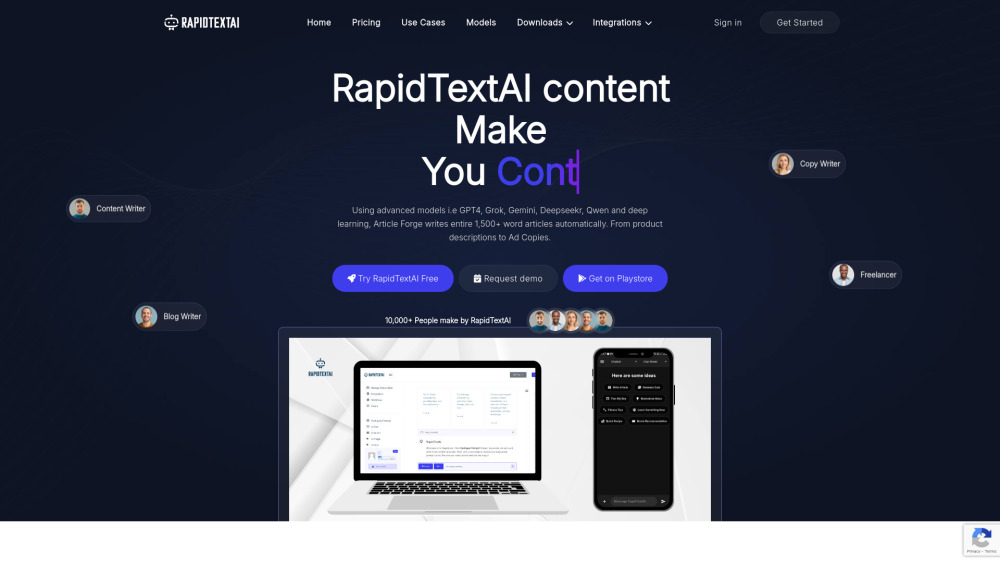
RapidTextAI is an AI-powered platform that combines natural language processing (NLP) with advanced machine learning algorithms to assist users in various stages of content creation. The platform offers a suite of tools tailored for different writing needs, including brainstorming, research, drafting, editing, and analysis. By automating repetitive tasks and providing intelligent suggestions, RapidTextAI helps users save time while maintaining high standards of quality and originality.
The platform's core features align with the key stages of content development identified in academic writing research. According to Floris and Renandya [1], effective AI tools support content generation, literature review, data analysis, editing, and citation management. RapidTextAI addresses each of these stages through specialized modules that work together to create a seamless workflow for content creators.

Source: digitalleadership.com
Stage 1: Content Generation and Idea Brainstorming
The first challenge many writers face is overcoming writer's block and developing clear research questions. RapidTextAI's content generation module uses advanced NLP to help users overcome this barrier by providing interactive prompts and generating initial ideas. Similar to how ChatGPT assists students in structuring their writing [1], RapidTextAI can simulate a conversation, giving users a way to explore ideas by "talking" to the AI.
For example, when faced with a broad topic like "digital marketing strategies," users can input prompts such as "What are the primary factors that motivate EFL students to learn English?" (as demonstrated in Figure 1 of the source material) to narrow down research questions. The AI then generates specific, researchable questions that guide the writing process. This approach helps users move past creative blocks and develop focused content strategies.
Source: rapidtextai.tenereteam.com
Best Practices for Brainstorming with RapidTextAI
- Start with broad prompts to explore multiple angles before selecting a specific direction
- Compare AI-generated ideas with traditional brainstorming methods to identify complementary approaches
- Use comparative analysis activities to evaluate AI suggestions based on criteria such as originality, scope, and available resources [1]
Stage 2: Literature Review and Research Support
One of the most time-consuming aspects of content creation is conducting thorough literature reviews. RapidTextAI addresses this challenge through its research assistant features, which help users find relevant sources quickly and efficiently. The platform integrates tools similar to Elicit, Semantic Scholar, and Research Rabbit, enabling users to search academic databases using specific keywords and refine results based on publication dates and citation metrics.
How RapidTextAI Enhances Literature Review
- Automated keyword analysis: Identifies relevant studies based on user-defined parameters
- Visual citation networks: Displays relationships between sources to help identify key authors and publications
- Comprehensive search capabilities: Finds both published and emerging research that might be missed through traditional methods
According to Enomoto et al. [1], AI-powered literature review tools can significantly reduce the time spent searching for relevant sources. For instance, Elicit identified 70 relevant papers in just 10 minutes during a study on liver cancer risks, with 37 of these being newly discovered through AI methods. While AI tools offer efficiency, the source emphasizes combining them with traditional methods to ensure comprehensive coverage [1].
Stage 3: Data Analysis and Research Enhancement
For content that requires data-driven insights, RapidTextAI provides powerful analysis tools that support both qualitative and quantitative research. The platform can assist with coding interview transcripts, finding patterns, and cleaning up quotes for manuscript preparation, similar to ChatGPT's capabilities [1]. For quantitative data, RapidTextAI can process large datasets, perform statistical analyses, and generate visualizations to help identify trends and correlations.
Examples of RapidTextAI's Data Analysis Features
- Qualitative analysis: Identifies themes in text-based data and generates structured outputs for thematic analysis
- Quantitative analysis: Performs calculations such as mean, median, and standard deviation for datasets
- Pattern recognition: Detects correlations between variables and generates insights that might be missed through manual analysis
Buchanan [1] highlights the importance of encouraging users to reflect on ethical concerns when using AI in data analysis. RapidTextAI addresses this by providing transparent analysis results and prompting users to verify findings through manual cross-checking. This balance between AI efficiency and human oversight ensures accuracy while maintaining academic integrity.
Stage 4: Writing Refinement and SEO Optimization
After initial drafting, RapidTextAI's editing tools help improve content quality and SEO performance. The platform offers grammar and style checks, vocabulary enhancement suggestions, and readability analysis—features similar to Grammarly and Trinka [1]. For SEO optimization, RapidTextAI provides keyword density analysis, readability scores, and suggestions for improving user engagement metrics.
SEO-Specific Features in RapidTextAI
- Keyword optimization: Analyzes content for relevant search terms and suggests improvements
- Readability scoring: Uses Flesch-Kincaid and other metrics to ensure content is accessible to target audiences
- User engagement predictions: Provides insights into how content might perform based on historical data
Xia et al. [1] found that AI-based tools like iWrite demonstrated significant improvements in students' English writing abilities through immediate, personalized feedback. RapidTextAI applies this principle to professional content creation, offering real-time suggestions that help writers refine their work while maintaining their unique voice.
Stage 5: Citation Management and Academic Integrity
Maintaining accurate citations and ensuring originality are critical for both academic and professional writing. RapidTextAI includes citation management tools that simplify reference organization and generation, similar to Bibcitation, Mendeley, and Zotero [1]. The platform supports multiple citation styles and provides features to check for consistency between in-text citations and reference lists.
Originality and Plagiarism Detection
RapidTextAI integrates tools like ZeroGPT, Turnitin, and iThenticate to help users verify the originality of their work. While these tools can identify instances of copied content, the source emphasizes that human assessment remains essential to avoid false positives and missed detections [1]. The platform provides detailed reports that help users understand potential issues and make necessary revisions.
Implementing RapidTextAI in SEO Strategies
High-quality content is the foundation of effective SEO. RapidTextAI helps users create content that not only meets academic standards but also performs well in search engine rankings. By improving content quality, readability, and keyword relevance, RapidTextAI supports SEO objectives such as higher organic traffic, improved click-through rates, and better user engagement metrics.
SEO Benefits of Using RapidTextAI
- Improved content quality: Higher-quality content tends to rank better in search results
- Enhanced readability: Content optimized for readability is more likely to be shared and linked
- Keyword relevance: AI-driven suggestions help users incorporate relevant keywords naturally
- Faster content creation: More time for content distribution and link building activities
According to Oswald [1], assessing quality for qualitative researchers involves considering factors such as methodological rigor and adherence to field-specific norms. RapidTextAI helps ensure content meets these standards through its editing and analysis features, making it suitable for both academic and commercial publishing.
Best Practices for Using RapidTextAI Responsibly
While RapidTextAI offers significant benefits, the source emphasizes the critical role of human oversight in maintaining academic integrity and originality [1]. Users should follow these best practices:
- Critical evaluation: Always verify AI-generated suggestions against traditional methods and personal expertise
- Maintain original voice: Use AI as a tool to enhance, not replace, human creativity and analysis
- Document AI usage: Keep records of how AI tools were utilized in the content creation process
- Combine AI with human judgment: Rely on human expertise to interpret results and make final decisions
Teachers and educators can adapt these strategies for classroom settings, using RapidTextAI to guide students through the writing process while emphasizing critical thinking and ethical use of technology [1].
Conclusion
RapidTextAI represents a significant advancement in AI-powered content creation, offering a comprehensive solution that addresses the challenges faced by writers, marketers, and educators. By integrating features for content generation, literature review, data analysis, editing, and citation management, the platform helps users create high-quality content efficiently while maintaining standards of originality and accuracy.
The benefits extend beyond individual productivity to broader SEO performance, as high-quality content created with RapidTextAI is more likely to rank well in search engines and engage target audiences. However, the source's emphasis on responsible use reminds us that AI should complement, not replace, human creativity and critical thinking.
As AI technology continues to evolve, tools like RapidTextAI will play an increasingly important role in content creation. By embracing these technologies while maintaining ethical standards, users can enhance their content strategies and achieve better results in both academic and commercial contexts.
Next Steps: Explore RapidTextAI's free trial to see how it can transform your content creation process. Sign up today to experience the benefits of AI-powered writing and SEO optimization.
References
[1] Floris, F. D., & Renandya, W. A. (2025). Artificial intelligence tools for research writing: Practical tips for teachers. Teaching English as a Second Language Electronic Journal (TESL-EJ), 29(1). https://doi.org/10.55593/ej.29113int2
Note: This article incorporates insights from academic research on AI integration in writing, specifically referencing the work of Floris and Renandya [1] on AI tools for research writing. The content is optimized for SEO with natural integration of primary keywords ("RapidTextAI," "writing content," "SEO") and secondary keywords related to content creation, research, and digital marketing.
Comments
Post a Comment